How much does a deck cost?
The cost of a new deck depends on much more than the boards. From substructure and railing to labor and the features you choose, let's break down the factors that influence your total project cost. Use it to build a realistic budget, and understand what to expect before you talk to a contractor.
See what your budget can build
These are estimated total project costs — materials, labor, and substructure combined. Only a contractor can give you an accurate quote for your project.
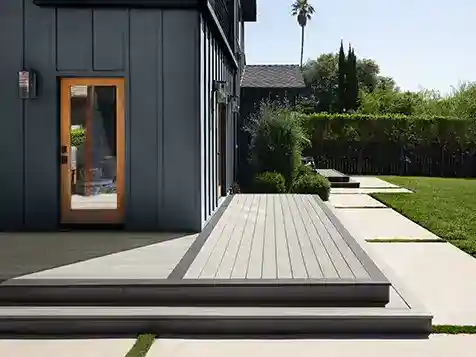
Starting point: $10,000 - $30,000
Small to mid-size composite or PVC deck, simple rectangular layout, standard substructure, minimal features.

Mid-range: $30,000 - $60,000
Larger composite or PVC deck that is single level, with railing and stairs, standard substructure, and a few upgrades.
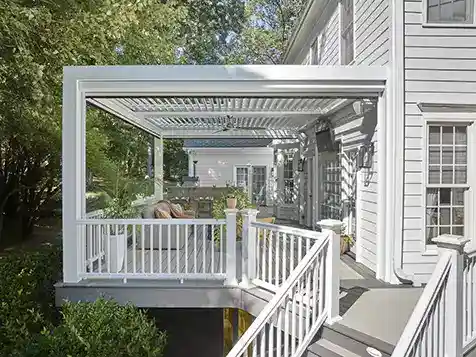
Premium: $60,000 - $100,000
Large deck with premium materials, multi-level layout, full railing, lighting, pergola or shade structure, standard or aluminum substructure.

High-end: $100,000+
Custom, multi-level builds with premium PVC decking, aluminum substructure, and high-end add-ons like built-in kitchens, hot tubs, pergolas, and premium lighting.
What makes up the cost of a deck?
Whether you're building with composite, PVC, or traditional wood decking, the cost breakdown generally remains the same. Substructure material and labor makes up the largest share at 38%, followed by decking and railing labor at 30%, decking material and fasteners at 20%, and railing material at 12%. If you choose wood decking, you'll also need to account for ongoing maintenance and repair costs beyond the initial project.
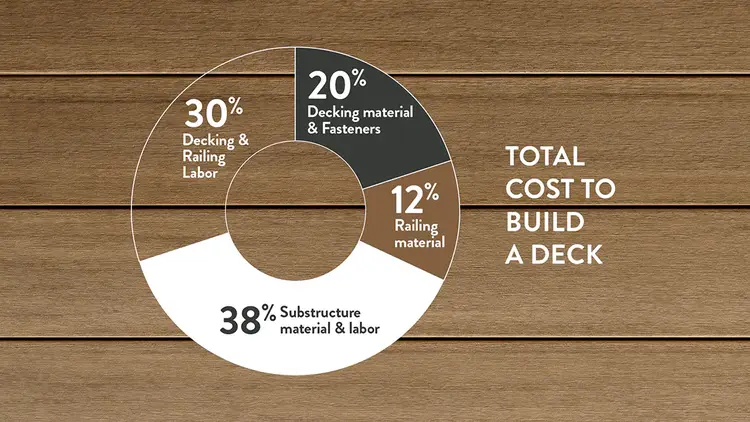
What makes up the cost of a deck?
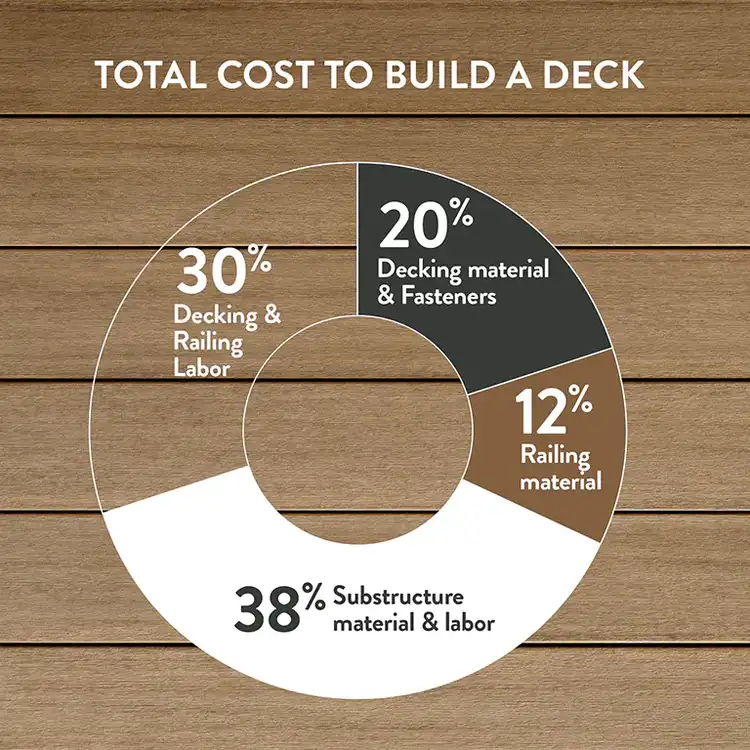
Whether you're building with composite, PVC, or traditional wood decking, the cost breakdown generally remains the same. Substructure material and labor makes up the largest share at 38%, followed by decking and railing labor at 30%, decking material and fasteners at 20%, and railing material at 12%. If you choose wood decking, you'll also need to account for ongoing maintenance and repair costs beyond the initial project.
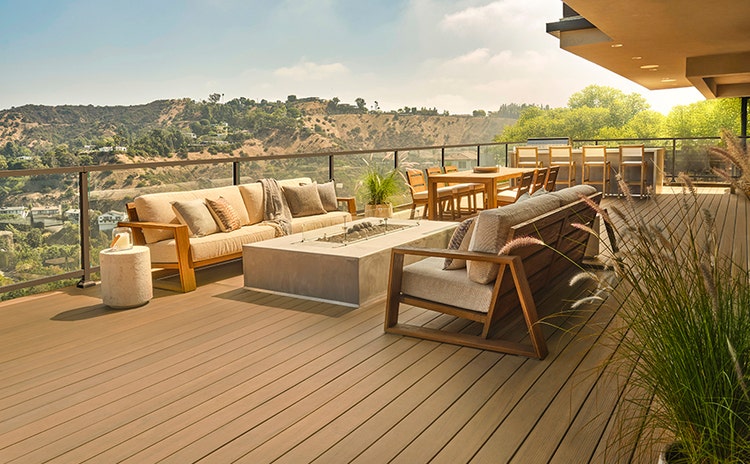
See what real decks cost near you
Estimates and averages only get you so far. Our Real Project Costs tool shows you actual TimberTech decks built by contractors across the country — with the real price range, materials, features, and location for each one. Filter by your region to see what homeowners nearby actually paid, what drove their costs up or down, and what your budget could realistically build. It's the closest thing to a real number before you talk to a contractor.
4 key factors that impact your deck cost
Deck size & material
Your deck budget is anchored by the dimensions you set and the materials you choose. A larger deck requires more materials and labor, while your decking material choice effects both upfront and long-term maintenance costs.
Design & add-ons
A simple, ground-level, rectangular deck is the most cost-efficient build. Going beyond a basic layout — adding elevation, multiple levels, or custom patterns — increases costs. Add-ons like railing, lighting, and built-in seating also add to the total.
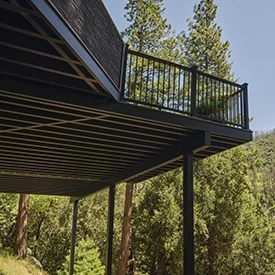
Substructure
The frame beneath your deck typically makes up 35% or more of total project cost depending on the framing material. Replacing an existing deck can reduce this significantly if the substructure is still in good shape.
Location & labor rates
Contractor rates can vary 30–50% by region, and local permits can add $500–$2,000 to your project. Getting a quote from a local contractor is the only way to know what your project will truly cost.
Composite vs. wood decking: 25-year cost comparison
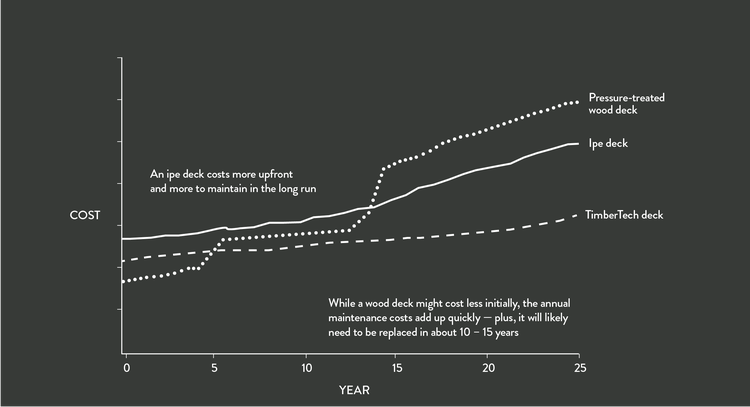
Upgrading from pressure-treated wood to TimberTech Advanced PVC or Composite adds as little as 15% to your total project cost — even though the boards themselves cost 20–40% more. That's because labor and substructure make up the majority of any deck build, regardless of what material you choose. Pressure-treated wood may look like the affordable option upfront, but annual maintenance costs accumulate quickly and most wood decks need to be replaced within 10–15 years. Ipe is even more expensive from day one and carries higher ongoing maintenance costs throughout its life. Over 25 years, TimberTech's advantage becomes clear — no sanding, staining, or sealing required.
Composite vs. wood decking: 25-year cost comparison
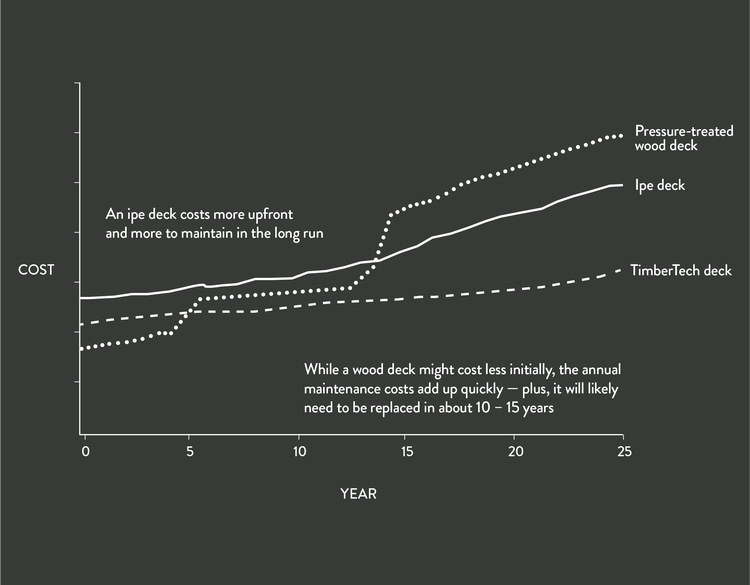
Upgrading from pressure-treated wood to TimberTech Advanced PVC or Composite adds as little as 15% to your total project cost — even though the boards themselves cost 20–40% more. That's because labor and substructure make up the majority of any deck build, regardless of what material you choose. Pressure-treated wood may look like the affordable option upfront, but annual maintenance costs accumulate quickly and most wood decks need to be replaced within 10–15 years. Ipe is even more expensive from day one and carries higher ongoing maintenance costs throughout its life. Over 25 years, TimberTech's advantage becomes clear — no sanding, staining, or sealing required.
Ready to go from estimates to answers?
Browse real projects near you, calculate material costs, or connect with a contractor for a free quote.

Real project costs near you
Browse real TimberTech deck projects from across the country. See what was built in your area, what features were included, and what it actually cost.

Request a free quote
Get matched with a TimberTech contractor near you for a free project estimate tailored to your specific deck vision.

Deck material cost calculator
Enter your deck dimensions to estimate the cost of materials — whether you're building it yourself or want a starting point before talking to a contractor.