TimberTech vs. Trex: Compare These Top Decking Brands
August 19, 2026
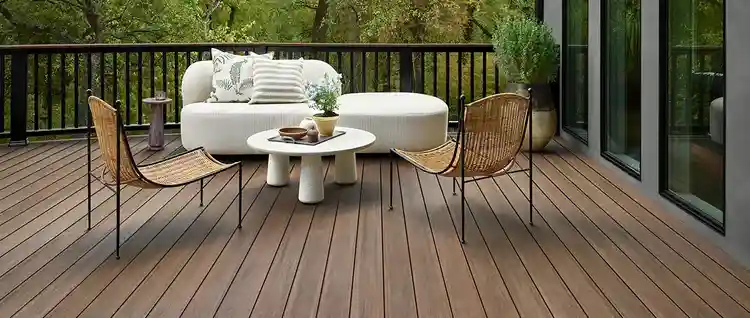
When it comes to composite decking brands, TimberTech and Trex lead the market as two of the most recognized names. Each company has earned its reputation by offering on-trend designs, durable products, and a focus on sustainability. If you're looking for the best composite decking for your outdoor space, chances are you've considered both brands in your research.
This comprehensive TimberTech vs Trex comparison will guide you through everything you need to know. We’ll explore their similarities, differences, and key features — giving you the insights to decide which brand best fits your project needs. By the end of this guide, you'll have a clear understanding of the pros and cons of each brand to help you make the most informed choice.
TimberTech vs Trex: How are they Alike?
TimberTech vs. Trex: How are they Different?
Which Composite Decking Should you Choose?
TimberTech vs Trex: How are they alike?
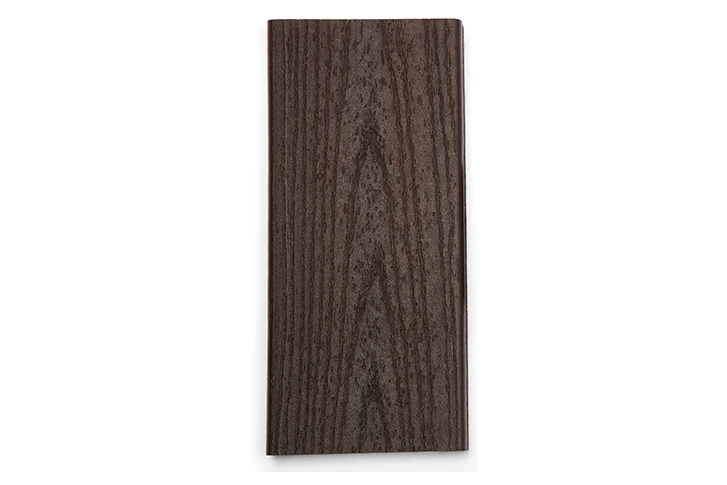
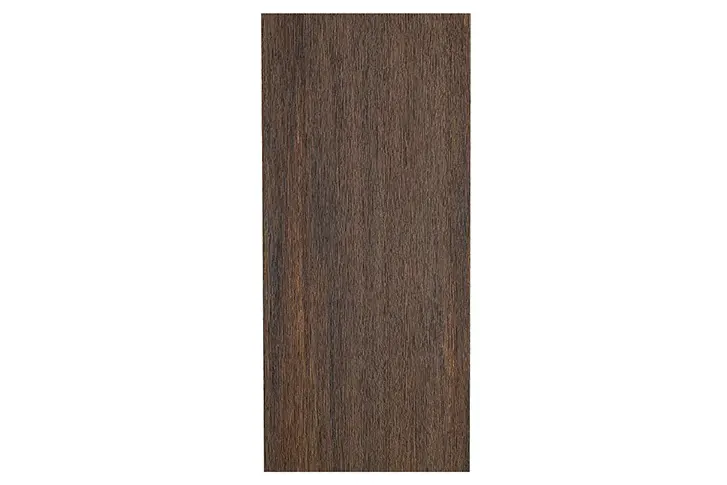
The top ways TimberTech Decking and Trex Decking are alike are their minimal maintenance requirements, their excellent warranty protection, and their sustainable products and manufacturing processes.
Maintenance requirements
Both TimberTech and Trex Decking are known for their low-maintenance decking solutions, making them ideal alternatives to traditional wood. Unlike wood decks that require regular staining, sanding, or sealing, both brands offer easy-to-clean deck boards that resist stains and can be maintained with just deck cleaner and the correct brush.
Warranty protection
A major selling point for both TimberTech and Trex is their decking warranties, giving homeowners peace of mind. TimberTech Advanced PVC stands out by offering a Limited Lifetime Product Warranty and a 50-Year Fade & Stain Warranty. Looking at composite decking warranties, the protection offered by TimberTech and Trex is comparable.
Sustainability
Both companies champion eco-friendly decking practices, utilizing recycled materials in their manufacturing processes. From production to performance, these two brands provide sustainable decking options designed for environmentally conscious consumers. Trex composite decking is made with up to 95% recycled material, while TimberTech Composite is made with up to 85% recycled material — with a higher percentage of virgin polymers and wood flour for added stability. TimberTech Advanced PVC is made with up to 65% recycled material. The percentage of recycled content in Trex Cellular PVC is unknown at this time.
TimberTech Decking is more sustainable than wood1. TimberTech Advanced PVC Decking is fully recyclable at the end of its useful life through the FULL-CIRCLE Recycling Program®, making it the greenest PVC on the market — plus, TimberTech is the number one vertically integrated PVC recycler in the USA.
Heat mitigating options
Surface temperature is a common concern for homeowners considering composite decking, which is why both brands offer a range of colors engineered to stay cooler to the touch than traditional composites. TimberTech Advanced PVC offers 14 colors featuring Cool Touch® Technology and, compared to composites, cools off quicker when no longer in direct sunlight. Trex has the same number of colors featuring their SunComfortable™ Technology. Even with heat-mitigating technology, both brands warn that any decking will get hot in the sun and recommend lighter colors for hotter climates.
TimberTech vs. Trex: How are they different?
To help you understand how TimberTech Decking and Trex Decking are different, let's take a look at four key areas: pricing, materials and construction, aesthetics and design, and durability and more — specifically, moisture resistance and fire resistance.
Pricing
Both Trex and TimberTech offer decking collections that span from entry-level to super-premium — and both deliver stronger long-term value because they eliminate the ongoing costs of sanding, staining, and sealing. Each brand covers the full spectrum, but Trex leans toward more lower-tier options, while TimberTech leads with greater variety and strength in the premium price points.
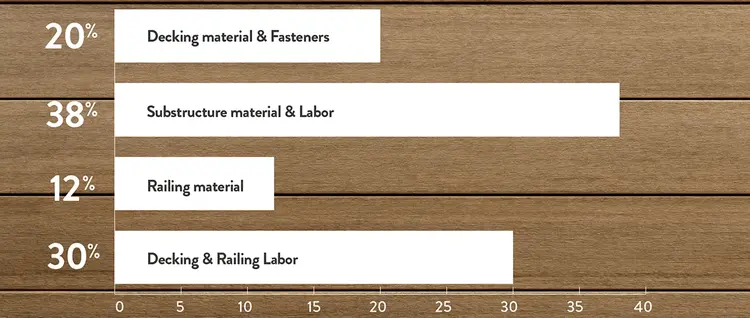
Whatever your planned deck budget may be, it’s important to understand that the cost of your decking materials is actually a small part of the total cost. Whether you build with PVC or composite, design a deck that’s small and simple or large and elaborate, you can expect the decking material to account for about 20% of the total project cost.
Materials and Construction
One of the biggest distinctions lies in the materials. TimberTech offers two different options for capped composite decking — 3-sided and 4-sided — as well as five Advanced PVC Decking collections. Trex focuses primarily on 3-sided capped composite decking and has one PVC collection available in select regions.
Advanced PVC Decking
There are only a few PVC decking brands on the market, and, unlike TimberTech, Trex only offers theirs in select regions. Available coast to coast, TimberTech Advanced PVC offers some of the most realistic wood looks, as well as superior moisture resistance. From core to cap, it's made from 100% polymer and zero organic material — so there's nothing to hold moisture that can cause rot, mold, and mildew, which can compromise long-term performance.
Capped decking: 4-Sided vs 3-Sided
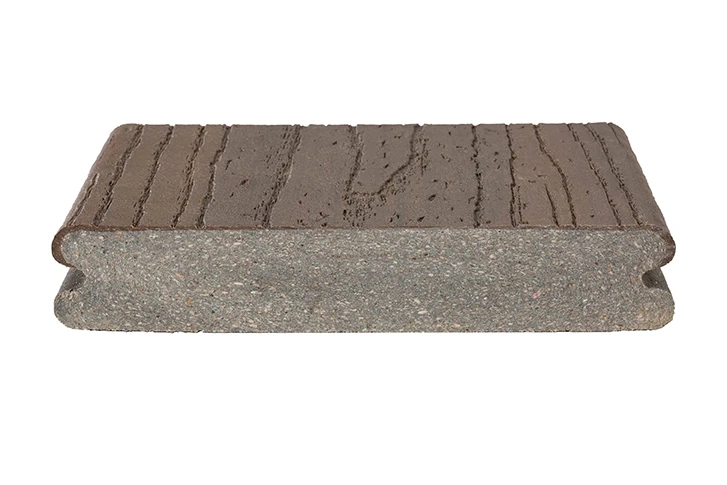
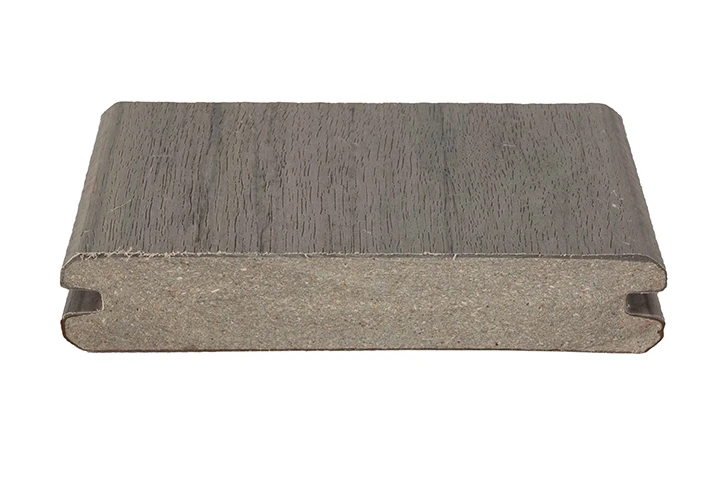
Composite decking is made from a blend of polymers, plus organic material, including wood flour, which is susceptible to moisture damage. Most TimberTech Composite collections have fully capped deck boards with a 360°, 4-sided cap made with no organic material to protect against moisture on all sides, including the grooves, and help ensure long-term performance. By contrast, Trex only offers 3-sided capping — even on their higher-priced collections — which leaves the underside and grooves more exposed to potential moisture issues like mold, mildew, and rot. Plus, TimberTech capping is made with 100% moisture-resistant polymers. The capping on Trex’s popular Transcends line is made with a mix of polymers and wood flour, which creates another point of moisture vulnerability.
Aesthetics and design
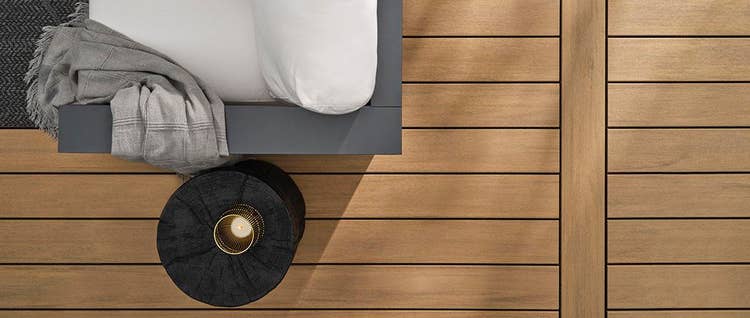
Color and wood grain options
Thanks to proprietary advanced color technology, TimberTech leads the industry with realistic wood looks — delivering stunning deck color options that mimic the texture and beauty of natural wood. Compared to Trex, TimberTech offers a broader range of colors and styles, catering to a variety of design tastes. TimberTech's innovative technology also creates grain styles that mimic the look of real wood. So, there's no heavy, unrealistic streaking, glossy surface, or deeply grooved grain patterns that can look and feel fake.
Design versatility
Standard board width is 5.5", but having multiwidth board options gives homeowners more flexibility for creating unique designs. The Trex Transcend collection also offers a narrow (3.4") option. TimberTech Advanced PVC offers boards in standard (5.5"), wide (7.25"), and narrow (3.5") widths — Vintage Collection® in all three widths and select Harvest Collection colors in standard and wide. TimberTech Advanced PVC also offers thicker MAX boards for docks. Another design advantage TimberTech Advanced PVC has over Trex is easier heat bending — allowing contractors to craft intricate architectural designs like curved decks and inlays faster and at lower temperatures than is required for composite decking
Durability and performance
Moisture resistance: Best, better & good
Best: Advanced PVC — TimberTech, Advanced PVC is made with zero organic material that can absorb water and deteriorate from mold, mildew, and rot — delivering homeowners the ultimate in moisture resistance. Trex also offers PVC decking in select regions.
Better: 4-sided capped composite — unlike Trex, the majority of TimberTech Composite collections are capped on all four sides — even in the grooves — to provide superior moisture resistance and protection against mold, mildew, rot.
Good: 3-sided capped composite — the standard for composite decking, 3-sided capping provides some moisture resistance and is offered by Trex as well as entry-level TimberTech Composite collections. These can be a good choice if you live in a drier climate and away from pools or bodies of water.
Also worth noting is that, unlike Trex’s popular Transcends line, the capping on every TimberTech board is made from 100% polymer, with no organic material.
Fire Resistance
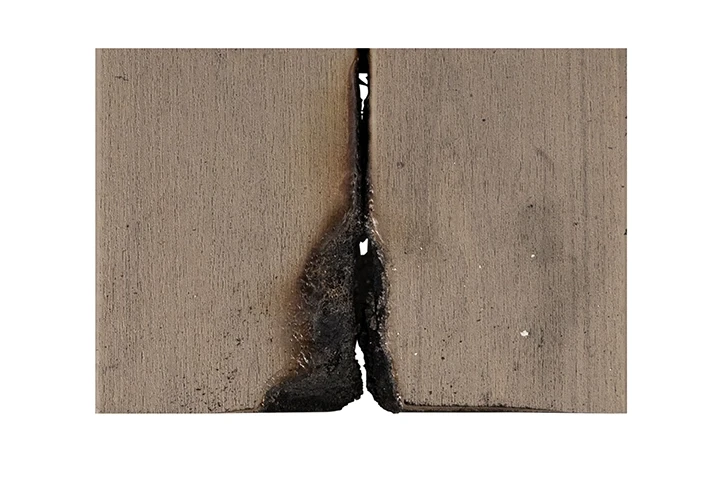
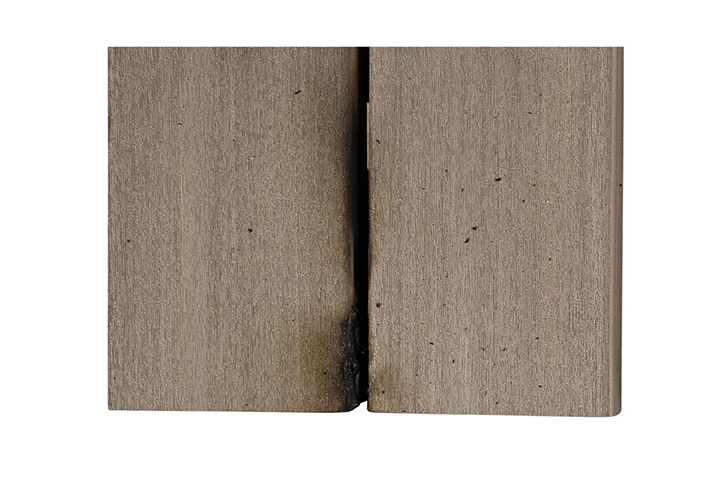
TimberTech vs Trex: Fire resistance comparison
TimberTech takes the lead in fire resistance, making it the best choice for fire zones. Here's what to look for and how TimberTech compares to Trex:
(Fire-resistant SKUs only)
(Square-shouldered boards only)
Ignition Resistant
In California, and surrounding states that have adopted their standards, “ignition resistant” refers to building materials that resist catching fire or burning easily and that may slow the spread of flames. Ignition-resistant decking is less likely to catch fire compared to traditional and composite decking materials. With ten total colors, TimberTech's Vintage and Landmark Collections, from the Advanced PVC line, are the first composite decking options in the industry to earn an Ignition Resistant designation. Available in two colors, Trex Refuge™ PVC decking is also ignition resistant, but only available in select regions.
Flame Spread Rating
This rating measures how quickly a material ignites and spreads flames. Class A is the best rating, signifying a material with th highest resistance to flames. Across the composite decking industry, TimberTech Advanced PVC has more collections (four) and colors (15) with a Class A Flame Spread Rating — Trex offers one collection in two colors, with limited, regional availability.
WUI Compliance
Wildland Urban Interface refers to zones where houses and areas prone to wildfires meet. Local building codes in WUI zones mandate fire-resistant materials for construction projects, including decks. WUI-Compliant materials resist flame spread and catching fire due to flying embers. TimberTech Advanced PVC Decking collections — and select Composite Decking collections — meet WUI Compliance standards, ensuring your deck adheres to regulations and offers an extra layer of protection. In total, you'll find that TimberTech offers more WUI compliant colors than Trex.
Which composite decking should you choose?
Deciding which composite decking to choose can come down to a number of factors, including your personal style preferences, your location, and what's most important to you. Both TimberTech Decking and Trex decking offer outdoor living solutions that are low maintenance, high performance, long lasting, and eco friendly. So, take a closer look at details like colors and styles, design versatility, and moisture and fire resistance solutions — you’ll find the perfect decking for creating your best possible outdoor life.
KEY FEATURES — TIMBERTECH VS. TREX
18 colors
2 colors
21 colors
30 colors
Vintage: standard, narrow, wide
Harvest: standard, wide
Transcend: narrow
35- to 50-Year Fade & Stain Limited Warranty
Want to feel more confident in your decision?
Order free TimberTech samples and compare their realistic wood looks and deck color options firsthand.
FAQ
Which decking brand is more durable over time: TimberTech or Trex?
How do TimberTech and Trex compare in maintenance requirements?
Which deck boards stay cooler in direct sunlight?
Which brand offers a better warranty?
Is TimberTech or Trex better for the environment?
Can you install TimberTech and Trex decking yourself?
Does TimberTech offer better moisture and mold resistance than Trex?
Speaking specifically of composite decking, TimberTech Decking does offer better mold- and moisture-resistant options than Trex decking. TimberTech Composite collections with four-sided capping provide 360° moisture protection — providing resistance to moisture damage like mold and mildew. Trex composite decking is only available with three-sided capping.
The absolute best moisture protection is found in PVC decking, because it has no organic material to absorb the moisture that can lead to mold, mildew, and rot. Both TimberTech and Trex have PVC collections, with TimberTech offering four collections with 15 total colors and Trex offering one collection with two colors.
Does TimberTech offer better fire resistance than Trex?
Which brand offers better colors and textures?
Which brand allows for more design customization?
Disclaimer:
1. According to life cycle assessment studies commissioned by The AZEK Company, independently performed by Sphera and ACV Brasil, combined with company estimates assuming 60% recycled material in TimberTech Advanced PVC decking.
2. TimberTech Legacy, Reserve, Terrain+, and Terrain Collections feature 4-sided capping, while TimberTech Prime+, Premier+, Prime, and Premier Collections feature 3-sided capping.
3. All TimberTech Advanced PVC collections are WUI Compliant, along with square-shouldered Premier Collection boards and select Reserve Collection skus. Vintage and Landmark Collections have an Ignition Resistant designation. Vintage, Landmark, Solstice, and Harvest+ Collections have a Class A Flame Spread Rating; Harvest and Porch Collections have a Class B Flame Spread Rating, and fire-resistant Reserve and Premier Collection boards have a Class C Flame Spread Rating. Trex Transcend Lineage, Transcend, and Select Collections have a Class B Flame Spread Rating and are WUI Compliant. Trex Enhance Collection has a Class C Flame Spread Rating. Trex Refuge is WUI Compliant with a Class A Flame Spread Rating and an Ignition Resistant designation.