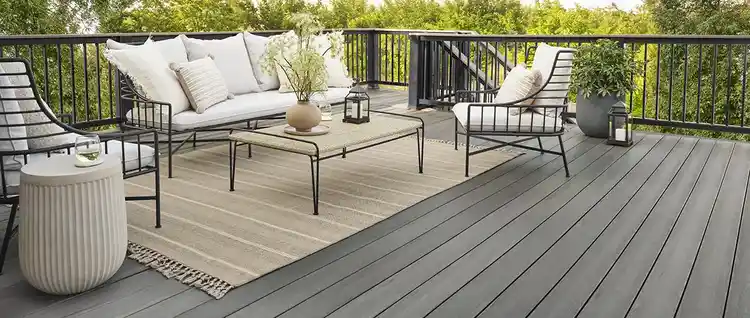
Make Wood Deck Stain a Thing of the Past
April 23, 2026
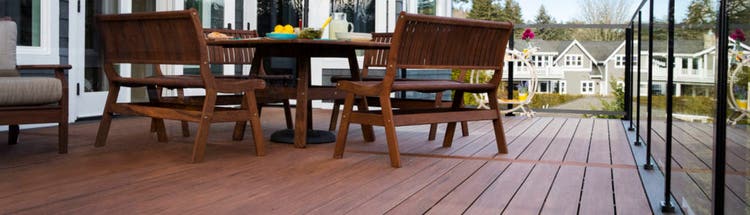
Many homeowners begin their deck journey seeking the classic look of wood. But maintaining a real wood deck comes at a cost. Wood stain and sealant, essential parts of upkeep for wood decks, present a range of challenges that impact your time, budget, and even the environment.
Wish you could skip staining?
If you’re looking to ditch the stain and enjoy a low-maintenance deck that looks beautiful year after year, you may be ready to upgrade to a composite deck.
The Drawbacks of Wood Deck Stain
Cost & Upkeep
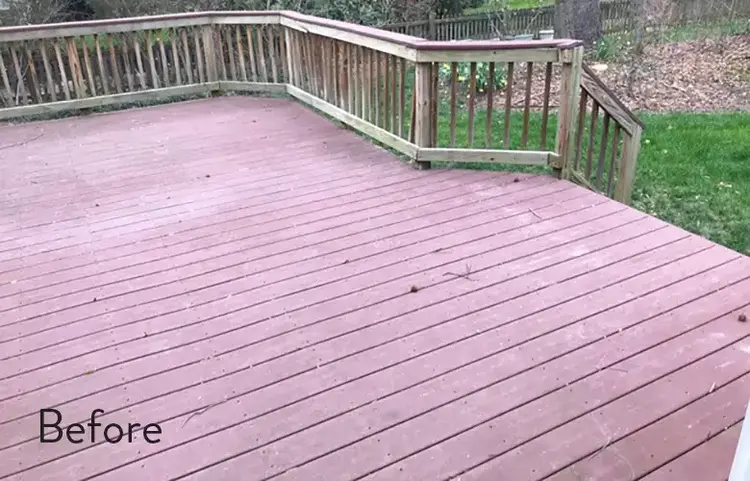
Wood deck stain isn’t a set-it-and-forget-it solution. Most wood decks require staining every 2–3 years, with annual costs ranging from $450 to $850 for stain and supplies. Before you even apply a stain, you’ll need to inspect, clean (often with chemicals), sand, and repair any damaged boards. After staining, there’s more wait time for drying, then sealing and drying again. Multiply this routine by the life of your deck, and the costs (and hours of work) add up quickly.
Wear and Weathering
Wood is naturally vulnerable to the elements. UV rays, rain, snow, and seasonal swings lead to fading, cracking, staining, and warping — even with diligent staining. No matter how precise you are, wood will eventually lose its original appeal.
Sustainability Concerns
Many common deck stains and cleaners release volatile organic compounds (VOCs) into the air, which can be hazardous for people and wildlife. Over time, this repeated use of chemicals also impacts the local ecosystem, making traditional wood deck maintenance less sustainable.
A Reliable Alternative: Composite Decking
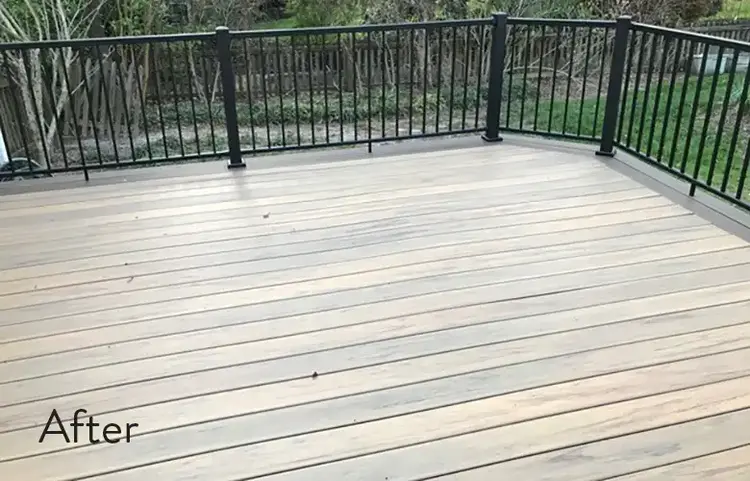
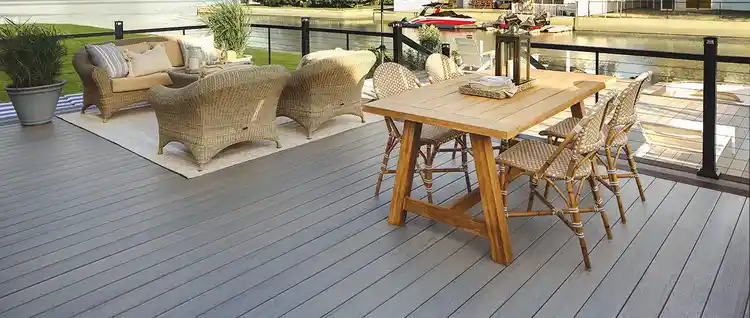
Modern composite decking addresses many of the frustrations tied to wood deck stain. By blending recycled wood fibers with plastics, composite boards emulate wood’s warm appearance while sidestepping its core weaknesses.
Lasting Beauty and Easy Care
Composite decking is engineered for minimal maintenance. You can skip the annual staining, sanding, and sealing routines. Instead, you’ll just need to clean the surface periodically. Plus, unlike wood, composites are splinter free and resist fading — so the look stays consistent for decades.
Durable and Sustainable
High-quality composite decking typically contains a significant percentage of recycled materials, keeping valuable resources in use and reducing landfill waste. Plus, it doesn’t require harsh chemicals to keep it looking its best. That makes it a smarter option for environmentally conscious homeowners.
Long-Term Value
Although the upfront cost may be higher than wood, composite deck boards last much longer and avoid recurring stain and repair expenses. Over time, this adds up to real, measurable savings — both in dollars and effort.
TimberTech: The Best of Both Worlds
If you’re searching for composite decking that checks every box — authentic wood looks, easy maintenance, and proven longevity — TimberTech is a standout choice.

Superior Real Wood Look
TimberTech deck boards capture the natural grain, color, and charm of real wood. Whether you prefer a deep, rustic tone or a lighter, contemporary finish, TimberTech offers profiles inspired by nature and crafted for long-term performance.
Exceptional Maintenance and Longevity
Capped with advanced technology, TimberTech decks are exceptionally resistant to moisture, UV, and stains. Maintenance is as simple as a periodic wash — no sanding, staining, or sealing required. The result is an outdoor living space that stays beautiful for decades, not just seasons.
Designed for Sustainability
TimberTech is committed to sustainability, incorporating recycled materials into every board and avoiding the need for harsh cleaners or chemicals. When you choose TimberTech, you help preserve trees while enjoying a premium product built to last.
No More Wood Stain?
- Deck stains require ongoing effort, time, and money — and have environmental downsides
- Composite decking offers a reliable alternative: Low maintenance, lasting durability, and real wood looks without the hassle
- TimberTech leads the way, combining a true wood aesthetic with industry-leading performance and a commitment to sustainability
Enhance your outdoor space for the long term. Explore TimberTech composite decking options and make wood deck stain — and its drawbacks — a thing of the past.